
SEARCH WHAT YOU WANT
RFID CARD
Laser Card
A laser card is a type of card that features information and graphics engraved or etched onto its surface using laser technology.
This method allows for high-resolution images and intricate designs, making it durable and tamper-resistant. Laser cards are commonly used for identification purposes, such as government IDs, driver's licenses, and corporate badges, as well as in membership and loyalty programs due to their enhanced security features and aesthetic appeal.
A laser card is a type of card that features information and graphics engraved or etched onto its surface using laser technology.
This method allows for high-resolution images and intricate designs, making it durable and tamper-resistant. Laser cards are commonly used for identification purposes, such as government IDs, driver's licenses, and corporate badges, as well as in membership and loyalty programs due to their enhanced security features and aesthetic appeal.
Product Details
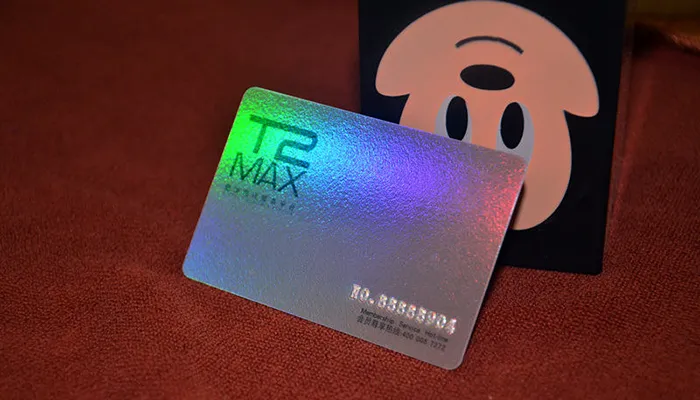
Laser card refers to a card printed with a laser PVC material, which looks like golden light from different angles. At the same time, laser silver or laser gold can be hot-stamped on the surface of ordinary PVC cards. When you take out the card to show it to others, it can also enhance the image of the company and give people a noble and elegant feeling. As a result, it has won the favor of more and more business people.
The card is a changing pattern with various colors. It can present a special reflective change body in any part of the card, which has a good visual effect and can enhance the anti-counterfeiting function and anti-scanning and copying function of the transaction card, making the circulation of the transaction card safer.
It includes a multi-layer structure, the middle layer of the laser card includes a core layer, the upper and lower outer surface layers are transparent coating layers, and also includes a pattern printing layer.
The pattern printing layer is arranged in the inner surface area of one or two layers of the transparent coating layer, located between the core layer and the transparent coating layer, wherein a laser pattern layer is also included between the core layer and the pattern printing layer.
The laser pattern layer is a pattern layer that presents a special reflective variable body at any part of the card as the visual angle and light change, so the laser pattern layer is a layer of electroplated aluminum layer with a laser pattern.
Here are some key applications:
-
Access Control: Used for secure entry into buildings, offices, and restricted areas, RFID metal cards can replace traditional keycards, enhancing security with encrypted data.
-
Payment Systems: Many banks and financial institutions use RFID metal cards for contactless payment, allowing quick transactions without the need for physical cash or swiping.
-
Identity Verification: These cards can serve as government-issued IDs, employee badges, or student IDs, providing secure identification for access to services and facilities.
-
Asset Tracking: Businesses utilize RFID metal cards to monitor high-value assets, equipment, and inventory, streamlining supply chain management and reducing loss.
-
Event Management: RFID cards are increasingly used for ticketing and access at events, enabling quick check-ins and reducing wait times.
-
Membership Programs: Gyms, clubs, and loyalty programs often use RFID cards to track member usage and provide personalized experiences.
-
Transportation: RFID metal cards can function as transit passes, allowing for seamless access to public transportation systems.
-
Healthcare: Used in patient identification and tracking, RFID cards enhance safety by ensuring accurate patient data access and reducing medical errors.
-
Smart Business Cards: Professionals can use RFID metal cards to share contact information or portfolio links simply by tapping the card on a compatible device.
-
Data Security: RFID metal cards can be embedded with advanced security features for sensitive data protection, useful in sectors like finance and government.
| Material | Laser PVC material |
| Specification size | 85.5×54 (mm) |
| Process | The card printing material is a special laser PVC material, with colorful colors, high-end and gorgeous, distributed to customers, showing personality, it is the first choice for making high-end membership cards and VIP cards, and can be made into a full-page laser or partial laser effect |
| Possible processes | Offset printing, silk screen printing, gold/silver base, silver powder, signature strip, embossed code, hot stamping/silver/laser, or other color gold, magnetic stripe, barcode, flat code, inkjet coding, labeling, surface is glossy, matte, frosted, film-coated, magnetic writing, etc. |
Laser card refers to a card printed with a laser PVC material, which looks like golden light from different angles. At the same time, laser silver or laser gold can be hot-stamped on the surface of ordinary PVC cards. When you take out the card to show it to others, it can also enhance the image of the company and give people a noble and elegant feeling. As a result, it has won the favor of more and more business people.
The card is a changing pattern with various colors. It can present a special reflective change body in any part of the card, which has a good visual effect and can enhance the anti-counterfeiting function and anti-scanning and copying function of the transaction card, making the circulation of the transaction card safer.
It includes a multi-layer structure, the middle layer of the laser card includes a core layer, the upper and lower outer surface layers are transparent coating layers, and also includes a pattern printing layer.
The pattern printing layer is arranged in the inner surface area of one or two layers of the transparent coating layer, located between the core layer and the transparent coating layer, wherein a laser pattern layer is also included between the core layer and the pattern printing layer.
The laser pattern layer is a pattern layer that presents a special reflective variable body at any part of the card as the visual angle and light change, so the laser pattern layer is a layer of electroplated aluminum layer with a laser pattern.
Here are some key applications:
-
Access Control: Used for secure entry into buildings, offices, and restricted areas, RFID metal cards can replace traditional keycards, enhancing security with encrypted data.
-
Payment Systems: Many banks and financial institutions use RFID metal cards for contactless payment, allowing quick transactions without the need for physical cash or swiping.
-
Identity Verification: These cards can serve as government-issued IDs, employee badges, or student IDs, providing secure identification for access to services and facilities.
-
Asset Tracking: Businesses utilize RFID metal cards to monitor high-value assets, equipment, and inventory, streamlining supply chain management and reducing loss.
-
Event Management: RFID cards are increasingly used for ticketing and access at events, enabling quick check-ins and reducing wait times.
-
Membership Programs: Gyms, clubs, and loyalty programs often use RFID cards to track member usage and provide personalized experiences.
-
Transportation: RFID metal cards can function as transit passes, allowing for seamless access to public transportation systems.
-
Healthcare: Used in patient identification and tracking, RFID cards enhance safety by ensuring accurate patient data access and reducing medical errors.
-
Smart Business Cards: Professionals can use RFID metal cards to share contact information or portfolio links simply by tapping the card on a compatible device.
-
Data Security: RFID metal cards can be embedded with advanced security features for sensitive data protection, useful in sectors like finance and government.
| Material | Laser PVC material |
| Specification size | 85.5×54 (mm) |
| Process | The card printing material is a special laser PVC material, with colorful colors, high-end and gorgeous, distributed to customers, showing personality, it is the first choice for making high-end membership cards and VIP cards, and can be made into a full-page laser or partial laser effect |
| Possible processes | Offset printing, silk screen printing, gold/silver base, silver powder, signature strip, embossed code, hot stamping/silver/laser, or other color gold, magnetic stripe, barcode, flat code, inkjet coding, labeling, surface is glossy, matte, frosted, film-coated, magnetic writing, etc. |
Previous: Metal Card
Next: Brushed Card
Give us a free quote
Submit this form and our sales representative will contact you soon.

Copyright © 2024 Guangdong Union Smart Technology Co., Ltd.