
SEARCH WHAT YOU WANT
RFID Plant Tags
The traceability management platform allows dealers and growers to understand the growth of flowers and the harvest of previous years.
Although traditional barcodes are low in cost, they have many shortcomings such as the inability to identify multiple labels, small information capacity, weak security, and poor waterproof performance.
Product Details
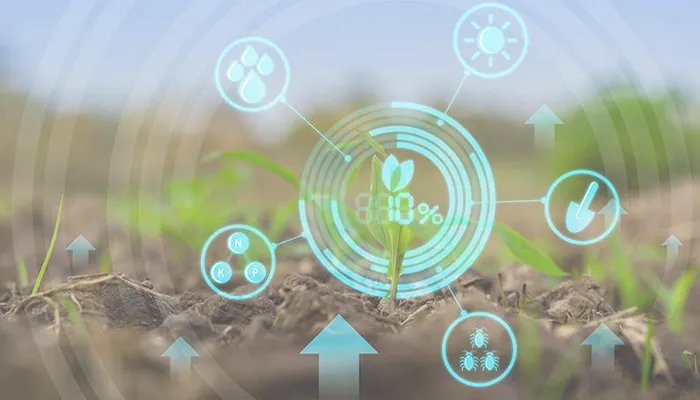
RFID (Radio Frequency Identification) plant tags offer several advantages for various applications in agriculture, horticulture, and industrial settings. Here are some of the key benefits:
Efficient Tracking and Monitoring: RFID tags enable real-time tracking of plants from the nursery to the end customer. This helps in monitoring growth conditions and ensuring optimal care throughout the plant life cycle.
Improved Inventory Management: RFID technology simplifies the inventory management process. It enables quick and accurate counts of plants, reducing the time and labor associated with manual inventory checks.
Enhanced Data Collection: RFID systems can store and transmit detailed information about each plant, including species, age, care requirements, and more. This data can be used for analysis and improving growth strategies.
Reduced Labor Costs: With RFID technology, technicians can scan multiple items at once, decreasing the time spent on manual data entry and allowing staff to focus on more valuable tasks.
Minimized Human Error: Automatic data capture reduces the risks of human error that often occur in manual data collection processes.
Increased Traceability: RFID tags can provide a complete traceability record for plants, which is essential for meeting regulatory requirements and ensuring food safety in agricultural applications.
Enhanced Customer Experience: For retail applications, RFID tags enable better customer insights and improved services, such as more accurate product availability checks and personalized marketing.
Environmental Monitoring: RFID tags can be integrated with environmental sensors to monitor conditions such as temperature, humidity, and soil moisture, providing valuable data to optimize plant health and growth.
Durability and Longevity: RFID tags are generally more durable than traditional labels, making them suitable for outdoor use where they may be exposed to harsh environmental conditions.
Integration with IoT: RFID technology can easily integrate with other IoT systems, allowing for comprehensive monitoring and automated management of agricultural systems.
Cost-Effectiveness: Although there is an initial investment cost for RFID systems, the long-term savings through efficiency, reduced labor costs, and improved management can be significant.
By adopting RFID plant tags, businesses can enhance their operational efficiency, improve plant care, and ensure a better understanding of plant life cycles, which ultimately leads to better productivity and profitability.
| Chip model | lmpinj(M4, M4E, MR6, M5), Alien(H3, H4) |
| Packaging material | PVC+aluminum etching+adhesive (printable, printable) |
| Working temperature | -20/+50℃ (humidity 20%~100%) |
| Storage temperature | -40/+70°C (humidity 20%~100%) |
| Working frequency | 915MHz (860-960MHz) |
| Communication protocol | UHF ISO18000- 6C |
| Reading and writing distance | .2-8M (with corresponding power reading and writing equipment) |
Previous: RFID Smart Bin Tags
Next: RFID Animal Ear tags
Give us a free quote
Submit this form and our sales representative will contact you soon.

Copyright © 2026 Guangdong Union Smart Technology Co., Ltd.